
The Pungency Question: Why Real Mustard Oil Bites Back
That sharp note that rises off the karahi — it is not a flaw. It is a feature. A primer on allyl isothiocyanate, the molecule that defines kachi ghani.
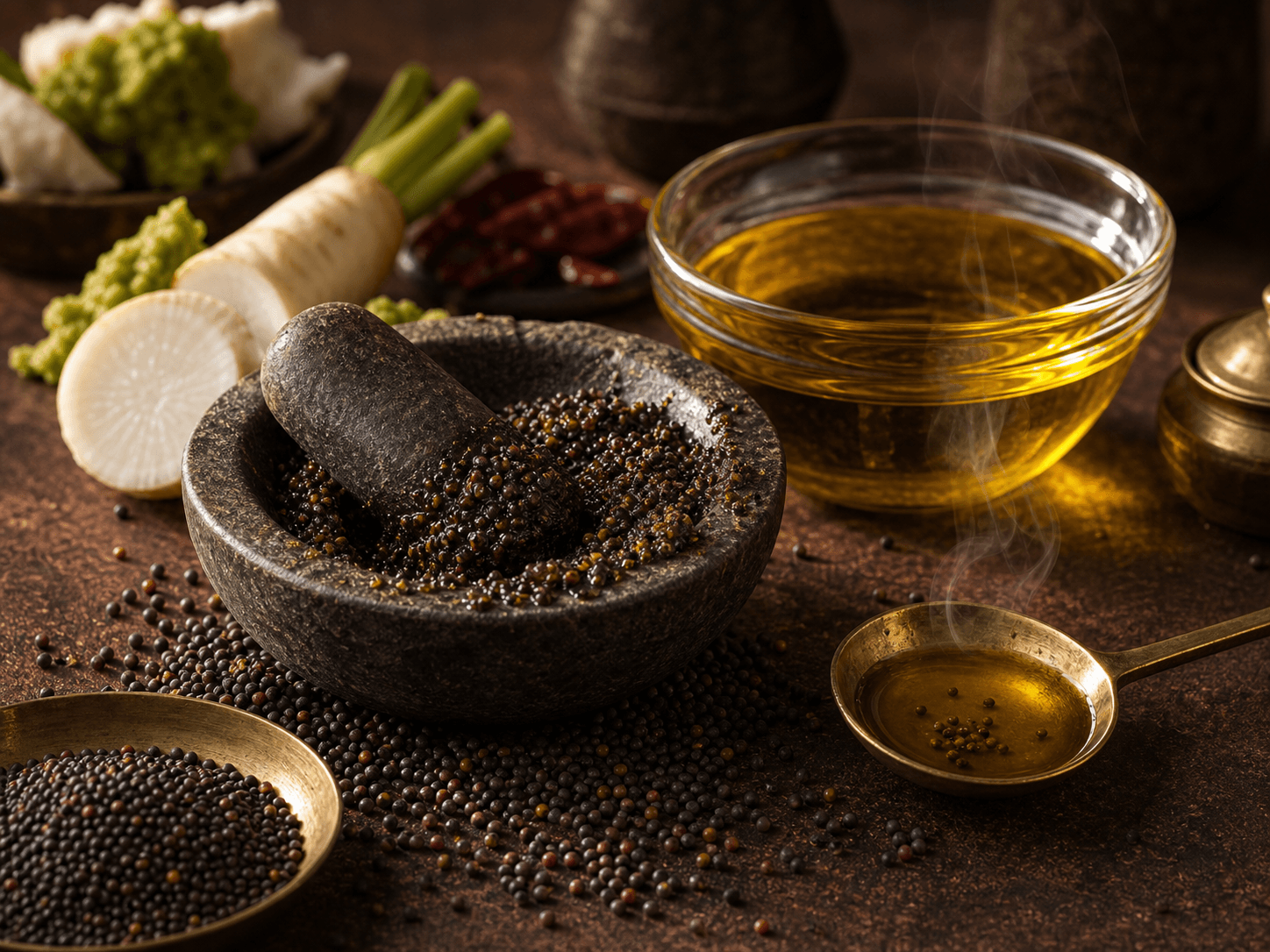
If you have ever stood over a kadhai of hot mustard oil and felt your nose prickle, you have met allyl isothiocyanate. The same compound that gives wasabi its punch, that makes horseradish a tear-jerker, that fills your sinuses when you bite into a fresh radish. In mustard oil, it is the signature.
Refined mustard oil strips most of it out. The result is an oil that smells faintly like nothing. Cooks turn the gas up to compensate. The dish loses depth. The whole point is missed.
What pungency tells you
Pungency is a quality marker, not a defect. The bite tells you the oil has not been over-refined, that the seed character is still present, and that handling and storage have not flattened it. A good kachi ghani oil should make your eyes water just a little when you bring it to smoke. If it does not, ask why.
“An oil that doesn't bite is an oil that doesn't speak.”