
Sarson Tail Champi: A Skin Ritual, Not Folklore
The Sunday oil massage is older than recorded recipe. New work suggests it is also chemistry — vitamin E, omega ratios, antimicrobials.
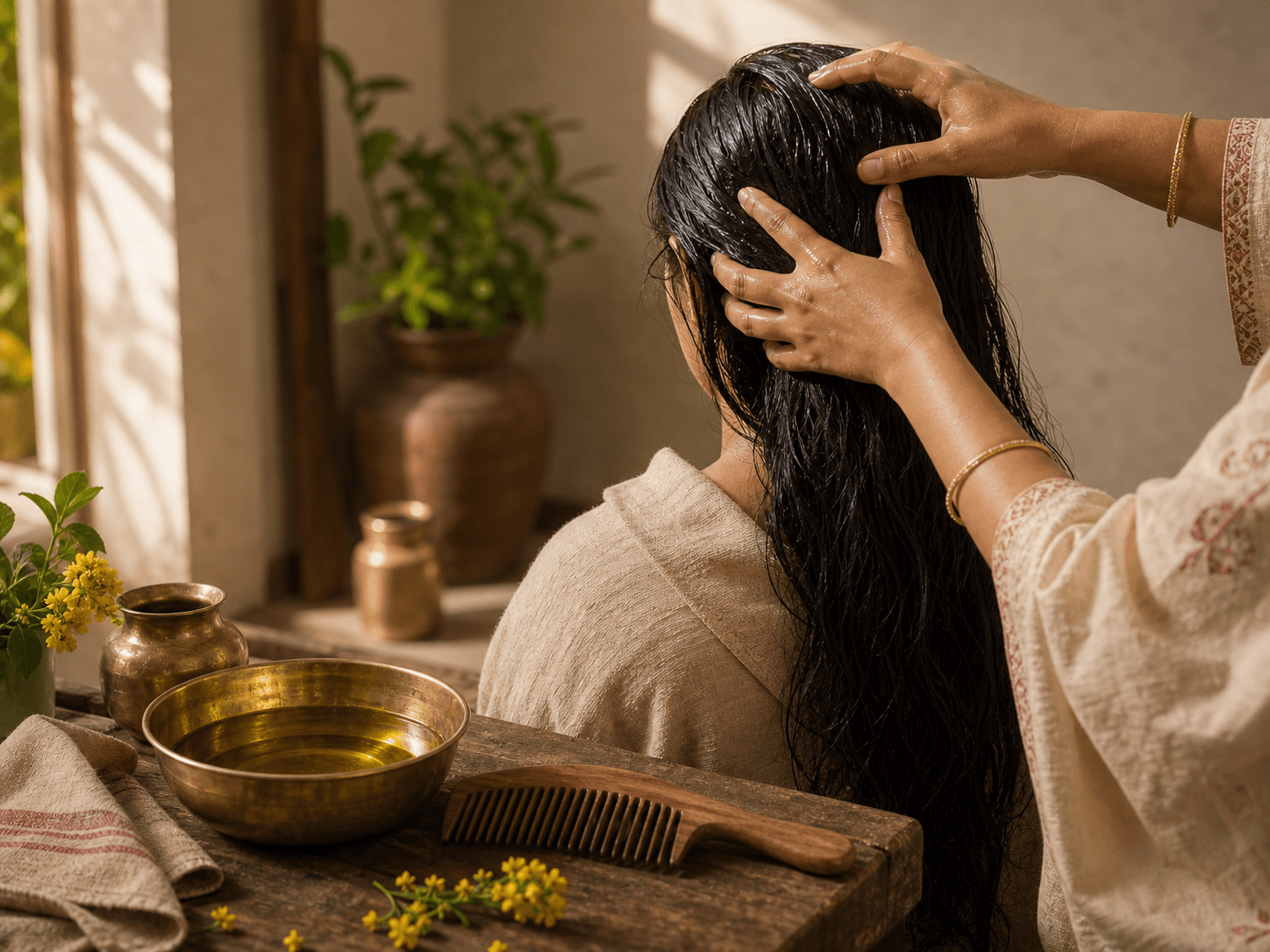
Every Sunday afternoon in millions of Indian homes, a small bowl of mustard oil is warmed over the stove. A mother, a grandmother, an aunt — someone takes the bowl, sits the child down, and begins the champi. Twenty minutes of slow pressure on the scalp, working the oil down to the roots. The hair gets the credit, but the ritual is doing more than people give it credit for.
What is actually in the oil
Kachi ghani mustard oil carries a notable amount of vitamin E, plus a fat profile rich in monounsaturated and omega-3 fatty acids. Vitamin E is what the cosmetic industry adds to anti-ageing creams. The omegas are what the wellness industry sells in pill form. Both have been in the mustard oil bottle the whole time.
And the antimicrobial part
Allyl isothiocyanate — the same compound that gives the oil its bite — has documented antimicrobial properties. The traditional scalp massage was, in part, a defence mechanism. People worked it out empirically. Science is catching up.
None of this means mustard oil is a cosmetic. It is an oil. But it is also evidence that the old practices were not always blind. Sometimes the grandmother was the lab.