
How to Read a Mustard Oil Label Before You Buy
The front of a pack sells the dream. The back of the pack tells you the discipline. Here is a simple buyer's guide for choosing mustard oil with more confidence.
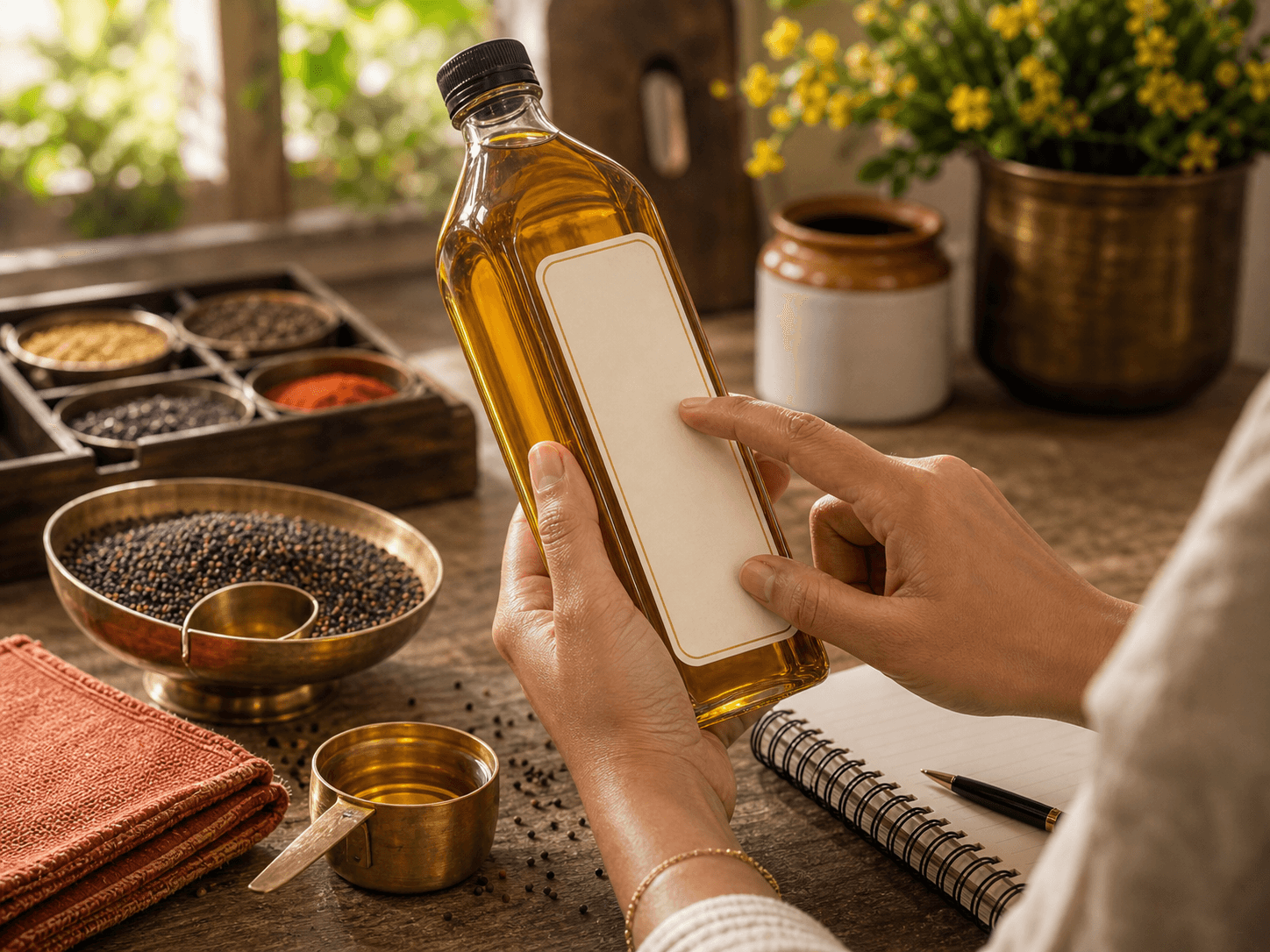
Most people choose cooking oil the way they choose salt: quickly, by brand memory and pack size. That is understandable. But mustard oil rewards one extra minute of attention. The label can tell you whether the brand is serious about traceability, freshness and basic food safety.
Start with identity, not adjectives
Words like pure, natural and traditional are useful only when the rest of the label behaves responsibly. Look for the name of the food business operator, batch number, manufacturing or packing date, net quantity, customer care information and the food licence details applicable to the pack. A trustworthy bottle should not make you hunt for these basics.
Check freshness like a cook
- 1Pick the newest pack available when you have a choice.
- 2Prefer a sealed bottle, pouch, can or tin that has not been dented, swollen, leaking or sun-faded.
- 3Store the oil away from heat and direct light once opened.
- 4Avoid judging mustard oil only by colour. Seed variety, season and processing can all influence shade.
“The label is not romance. It is the paper trail of care.”
What the label cannot tell you
No label can fully describe aroma, cooking behaviour or how the oil holds spices. That part still belongs to the kitchen. Heat a small spoonful, add cumin or garlic and notice whether the oil smells fresh, sharp and rounded after the first bite settles.
The right bottle should pass both tests: the formal one on the label and the emotional one in the pan.