
Kachi Ghani vs Refined Mustard Oil: What Changes in the Pan
A clear, kitchen-first explanation of pressing, aroma, filtration and why some dishes ask for an oil with character instead of a silent cooking medium.
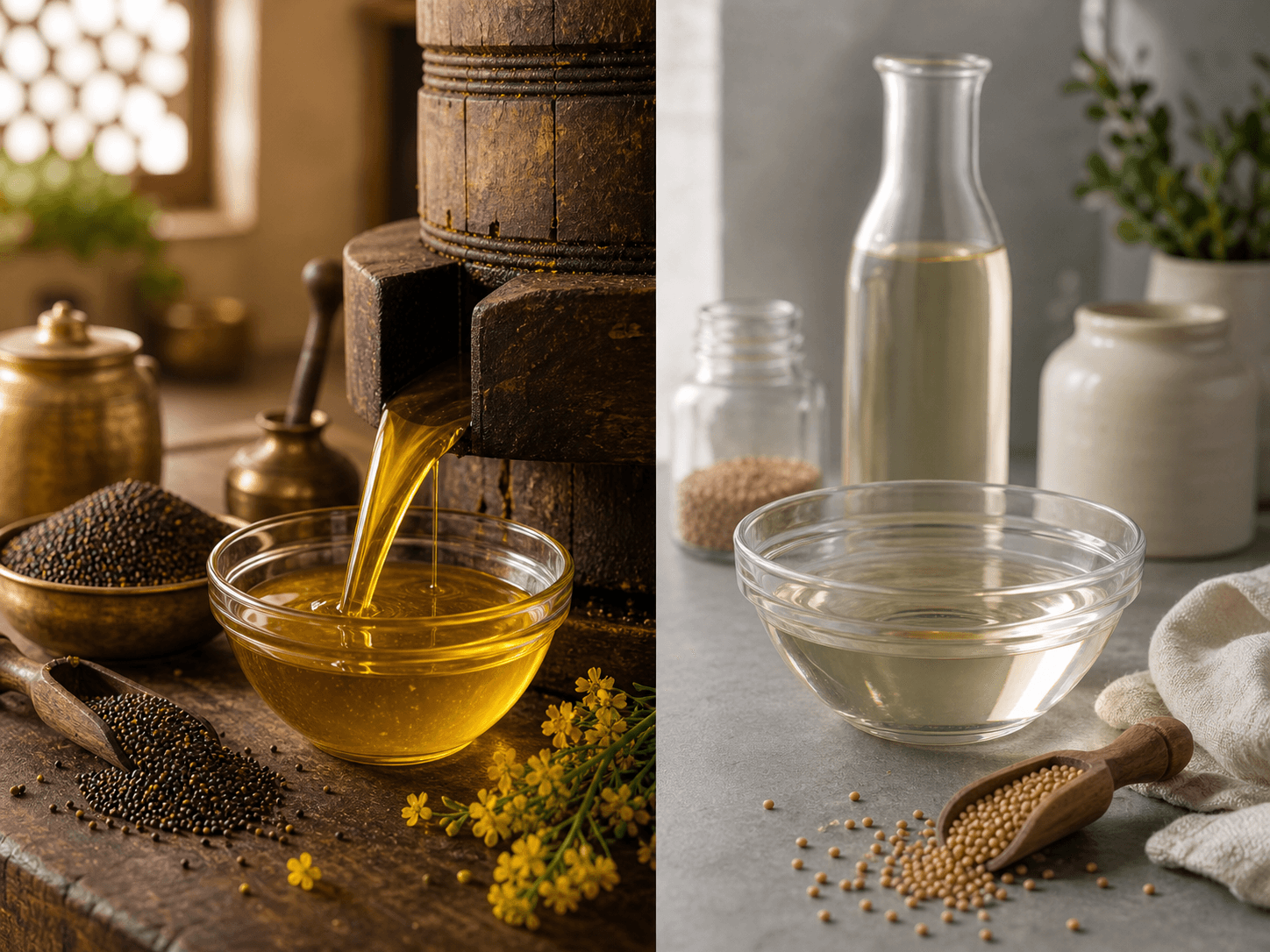
Kachi ghani and refined mustard oil may begin with the same seed, but they do not behave like the same ingredient. One is chosen for character. The other is often chosen for neutrality. The difference becomes obvious the moment garlic hits the pan.
The pressing difference
Kachi ghani refers to a slower mechanical pressing tradition where the seed is crushed with care and the oil keeps much of its natural aroma. Refining is a broader industrial process designed to make oil lighter, more neutral and more uniform. Neither word should be treated as magic by itself. The details matter: seed quality, temperature, resting, filtration and storage.
What changes in food
- 1In pickles, mustard oil is not only a carrier. It is part of the flavour structure.
- 2In tadka, a pungent oil gives cumin, garlic and chilli a sharper opening note.
- 3In saag, chokha and fish curries, the oil adds regional identity that neutral oil cannot copy.
- 4In delicate dishes, use less. A good mustard oil should be expressive, not heavy-handed.
The best rule is simple: if the recipe comes from a mustard-oil region, start by assuming the oil is part of the recipe, not a replaceable background ingredient.
“Neutral oil cooks the food. Mustard oil helps define it.”