
One Morning at the Bharatpur Mandi
Five a.m., forty trolleys of sarson, one auctioneer with a brass scoop. A field diary on how serious buyers judge a mustard seed lot.
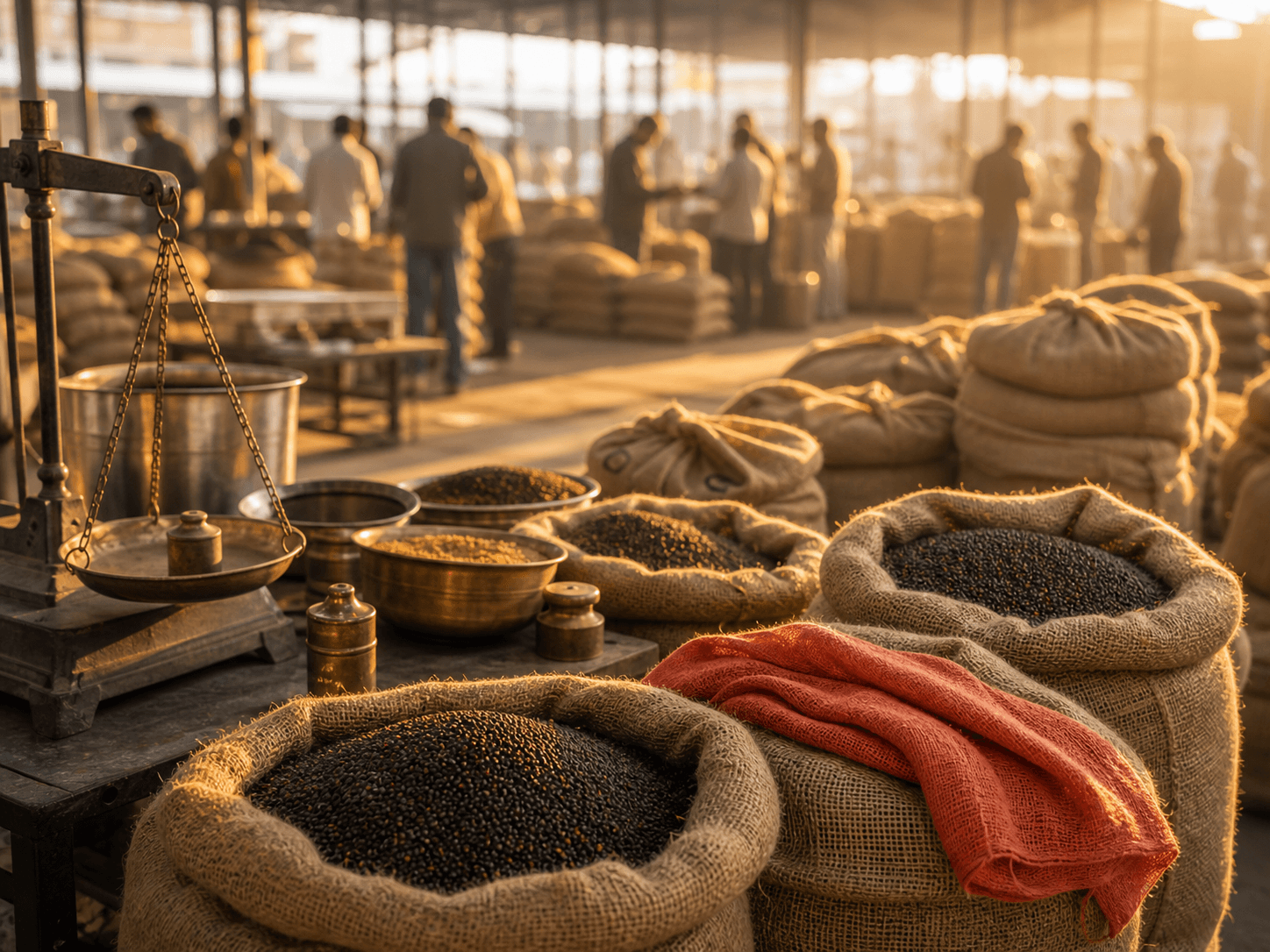
The mandi wakes before the town does. By five, the tractor-trolleys are backed in rows under the tin sheds, each heaped with sarson still smelling faintly of the field. By six, the arhatiyas — the commission agents whose families have brokered this crop for generations — are walking the rows with torches, running hands into the heaps wrist-deep. By seven, the auctioneer's voice is hoarse. This is what one morning in March teaches a buyer to notice.
The teeth test and the meter
Ghanshyam ji, seventy-one, has judged seed for most of his working life. His method is older than any handheld meter: a pinch from the heart of the heap, rolled between fingers for boldness, then a seed cracked between the teeth. A dry seed snaps clean; a damp one gives. Technology can confirm the reading, but the first lesson is still attention.
“The heap tells you what the farmer's whole year was like. Read it with respect.”
How a lot is judged
- 1Boldness: plump, even seed — small shrivelled grain means a stressed crop and less oil.
- 2The rattle: a handful poured back should sound dry, like fine gravel, not dull.
- 3Dust and stick: clean lots flow through the fingers; dirty ones cling.
- 4Moisture: below eight per cent or the lot waits in the sun.
- 5Oil content: many buyers look for strong yield potential; a meter confirms what the hands suspected.
The lot a buyer should let go
That morning, one lot looked beautiful but felt a whisper damp at the core — the kind of lot that can smell fine today and turn tired later. Someone bought it for a rupee more per kilo. Ghanshyam ji watched it load and said nothing, which is how he says everything.
Chai, and the part that is not business
Between auctions there is chai on a bench with the farmers who grew the lots. A young farmer from a village past Bayana told us about the January cold snap — three flowering nights he sat up watching the sky like a father in a hospital corridor. His lot tested 44.1 per cent oil. We bought all of it, and told him why. Procurement, done properly, is not a transaction. It is a relationship with next year built into the price of this one.