
One Seed, Many Names: A Field Guide to the Mustard Family
Sarson, rai, shorshe, kadugu — India speaks of mustard in a dozen tongues. A short field guide to the seed family behind the golden bottle.
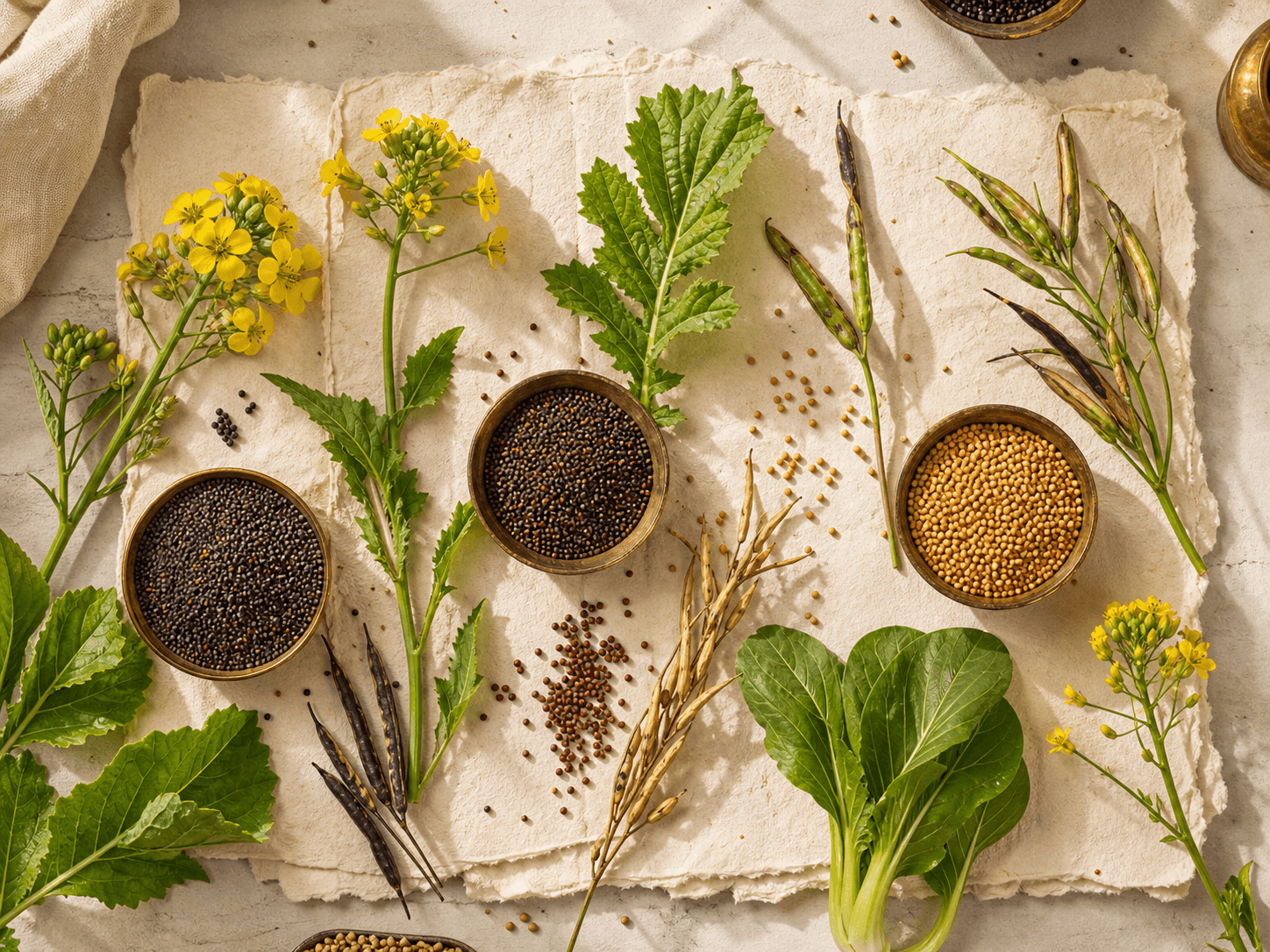
Stand at a mandi in March and every sack of mustard looks the same: small dark spheres, a faint dusty shine. But the trader running his hand through the seed is reading a family tree. India grows several distinct mustards, and the variety behind a bottle influences the colour, the bite and the character of the oil in your kitchen.
The family tree
- 1Brown Indian mustard (Brassica juncea) — the workhorse. The bulk of India's mustard acreage, the seed with the oil content and the pungency that defines kachi ghani. When a bottle says sarson, this is usually the sarson.
- 2Yellow sarson — the paler, plumper cousin. Prized in the east for a slightly sweeter, gentler oil; the seed behind many Bengali preferences.
- 3Black mustard (Brassica nigra) — small, fierce, and mostly a spice now. The banarasi rai of pickle masalas; too low-yielding to dominate the oil press.
- 4Toria — the early, short-season cousin sown when the calendar is tight, pressed and sold before the main crop arrives.
Why juncea rules the ghani
The arithmetic is simple. A good juncea seed carries roughly forty per cent oil, sometimes more — among the richest of India's oilseeds. It is a hardy rabi crop, sown into the residual moisture of October and November, needing little irrigation where winters are kind. And it carries the glucosinolates that become allyl isothiocyanate when crushed — the bite that makes mustard oil mustard oil. High oil, low fuss, strong signature: this seed shaped the mustard-oil kitchen centuries ago.
The mustard belt
Rajasthan leads the country — roughly two-fifths of the national crop in a good year, with Bharatpur and its neighbouring districts forming one of the crop's heartlands. Haryana, Uttar Pradesh, Madhya Pradesh and West Bengal follow. The calendar is the same across the belt: sown after the monsoon retreats, flowering gold through January, pods filling in February, harvest from March. One crop, one winter, one oil season.
One seed, many tongues
- 1Sarson — Hindi, and the word on most bottles.
- 2Shorshe — Bengali, as in shorshe ilish, the monsoon ceremony.
- 3Rai — the smaller, sharper pickling grade of the north.
- 4Kadugu — Tamil, where the seed crackles in every tempering.
- 5Aavalu — Telugu, first into the hot pan before the curry leaves.
- 6Mohari — Marathi, the pop in the phodni.
When a label says mustard oil, it is worth asking which mustard, from where, and with what standard of handling. A good label should make the seed story clear enough to trust. The name on the sack matters, because the sack is where the flavour begins.