
Mustard Honey: The Field's Second Harvest
When the fields flower in January, the beekeepers arrive by truck. On the pale, fast-setting honey of the mustard belt — and why the bees are good for the oil too.
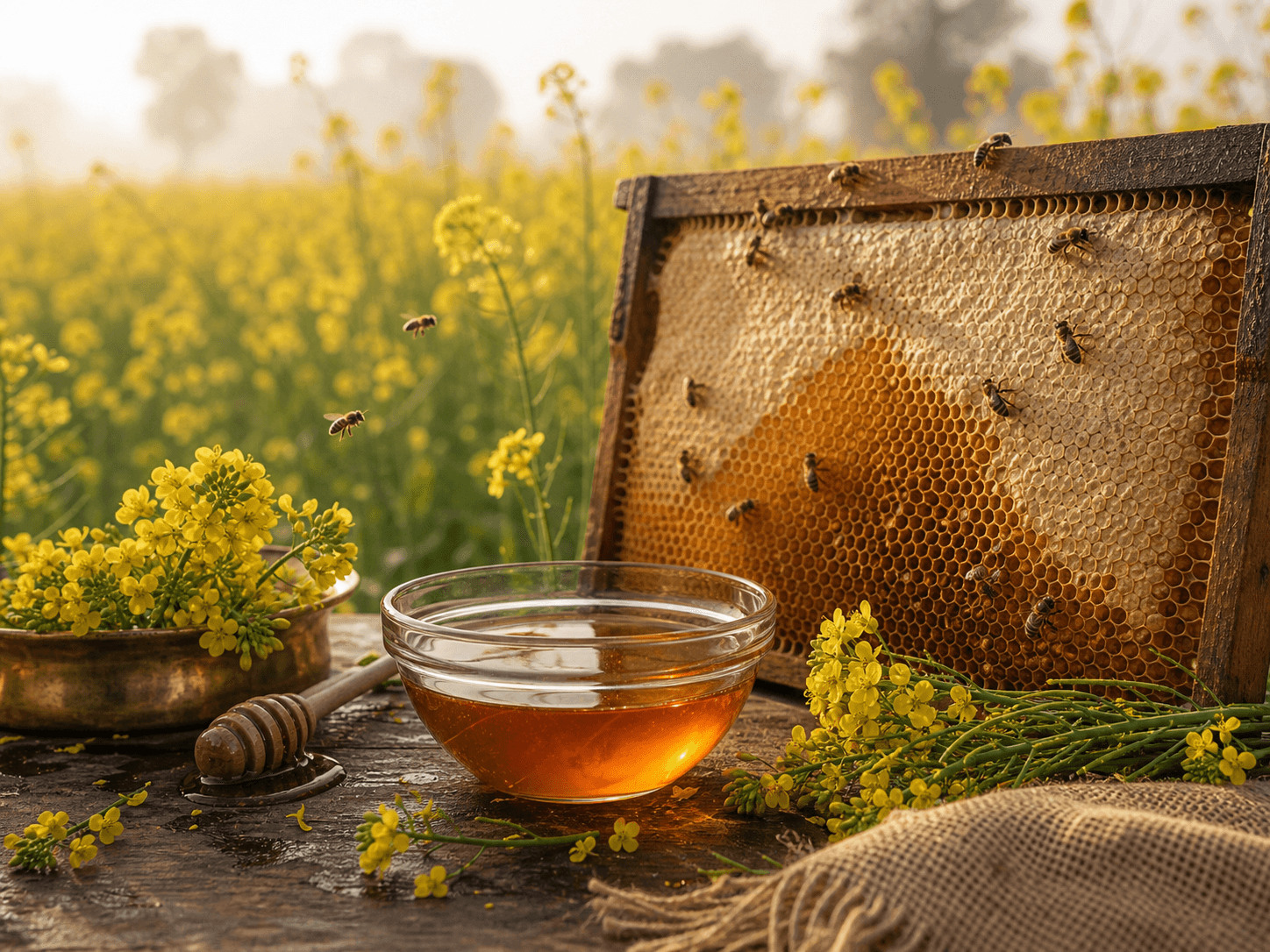
Drive the Bharatpur belt in late January and you will see them at the field edges: rows of white and blue boxes, unloaded overnight from trucks with Punjab and Haryana plates. The migratory beekeepers have arrived, as they do every year when the sarson flowers. For six golden weeks, the same field runs two businesses at once — one above the flowers and one below them.
A honey that hurries
Mustard honey is pale, mild and famously impatient. Its sugar profile leans glucose-heavy, which means it crystallises fast — sometimes within weeks of harvest — setting into a smooth, creamy solid. Buyers raised on clear squeeze-bottles often mistake the set for spoilage. It is the opposite: rapid, fine crystallisation is the signature of genuine mustard-belt honey. The trade even leans into it, selling it whipped as creamed honey.
What the bees do for the oil
Mustard flowers do not strictly need the bees — the crop can self-pollinate. But field studies and generations of farmer observation agree on the direction: fields humming with pollinators set more pods, and set them more evenly. The beekeeper pays nothing for the forage; the farmer pays nothing for the pollination. It is one of agriculture's oldest handshakes, renewed every January without a single document.
“The flower pays two salaries — one in nectar, one in seed.”
Why we tell you this
Ashnoor is not a honey brand, but mustard honey still belongs in the story because it reveals the crop's wider life. A field friendly to bees is usually a field handled with restraint. When your winter paratha carries mustard oil and someone's mustard honey side by side, both came from the same six yellow weeks. The crop, as ever, is more generous than any one bottle can hold.