
Diya, Ubtan, Kuppi: The Non-Cooking Life of Mustard Oil
The most Indian thing about mustard oil is how often it leaves the kitchen. Lamps, wedding pastes, winter lips, stubborn hinges — a tour of the bottle's other careers.
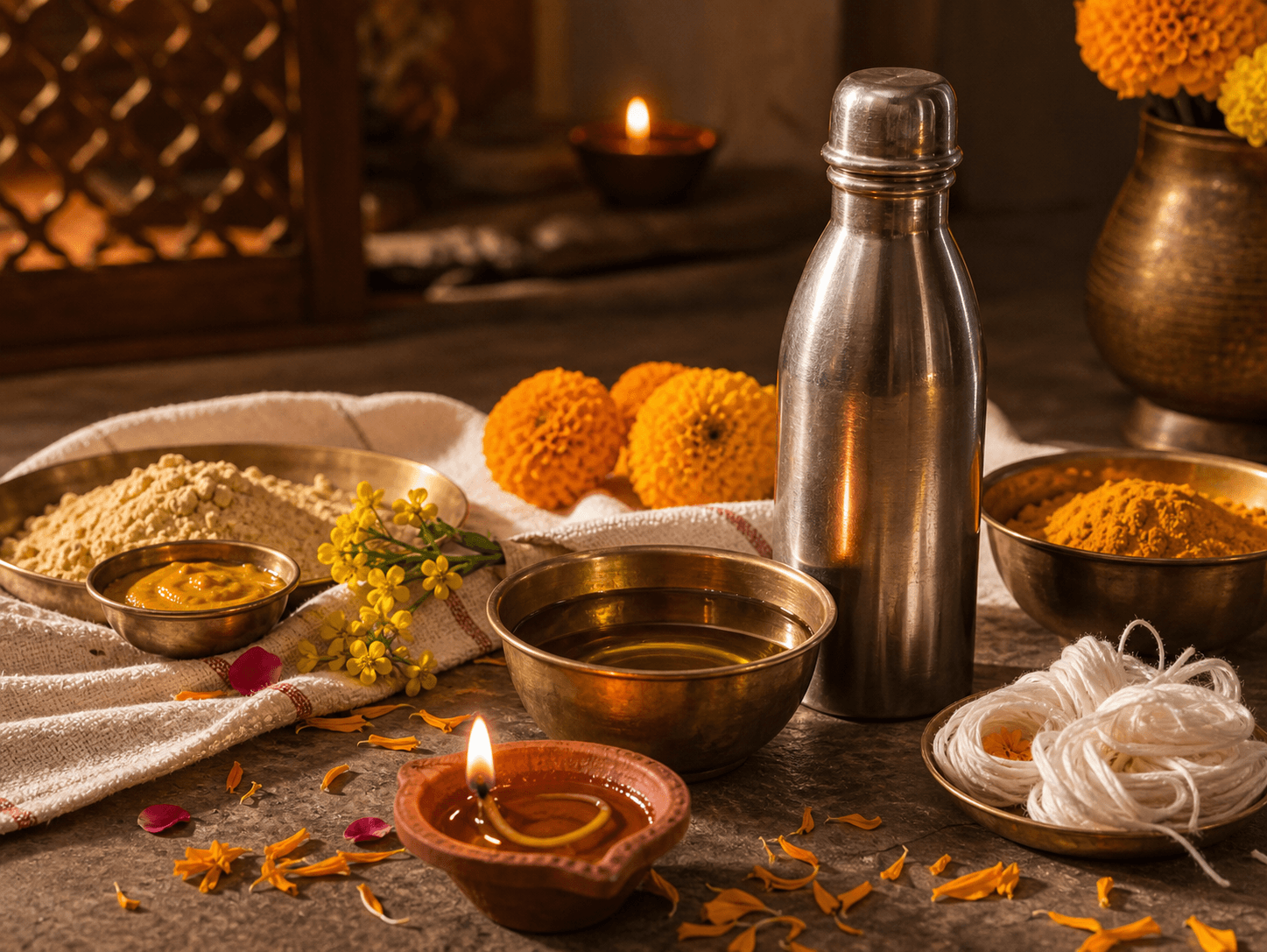
Ask what mustard oil is for and the kitchen answers first: tadka, achaar, saag, fish. But follow an actual bottle through an actual north Indian household and it keeps leaving the kitchen. To the puja shelf. To the bathroom. To the veranda where a door has been complaining for weeks. An ingredient becomes culture precisely when it escapes its category, and no oil in India has escaped further.
The lamp
Before electricity, the evening diya in much of the north burned sarson ka tel — a slow, steady, bright flame that made it the household's light as well as its fat. The tradition survives wherever lamps are still lit by hand, most visibly through the weeks of Kartik when courtyards and temple steps fill with small flames. Many families still keep their oldest rule about it: the lamp is also where tired kitchen oil goes to end its service with dignity.
The wedding paste
In the haldi ceremony of countless communities, the ubtan that turns brides and grooms golden is a paste of besan, turmeric and oil — and in the mustard belt, that oil is pungent and proud. The same jar often anoints the doorway: in parts of north India, a little mustard oil is poured on both sides of the threshold when the groom arrives, an old gesture of welcome and warding at once.
The small repairs
- 1Winter lips and cracked heels: a fingertip of oil, rubbed in at night, the original lip balm of the fog belt.
- 2The navel dab: grandmothers swore a drop in the belly button softened lips from the inside. Physiology shrugs; the ritual persists, harmless and beloved.
- 3Leather juttis: worked in with a cloth to soften new leather before a wedding's worth of standing.
- 4The complaining hinge, the stiff bicycle chain, the wooden rolling pin drying out at the edges — the kuppi served them all.
- 5The iron kadhai and tawa: a thin film after washing kept rust away between uses.
None of this is nostalgia for its own sake. It is evidence of trust — a household keeps only one substance within arm's reach of its food, its skin, its gods and its door hinges. The bottle earned that promotion over centuries. The least a brand can do is bottle something worthy of the shelf it sits on.