
Why Bengal Never Let Go of Shorshe
In most of India, mustard oil is the medium. In Bengal it is also the message — oil, paste and kasundi, three forms of one fierce culinary loyalty.
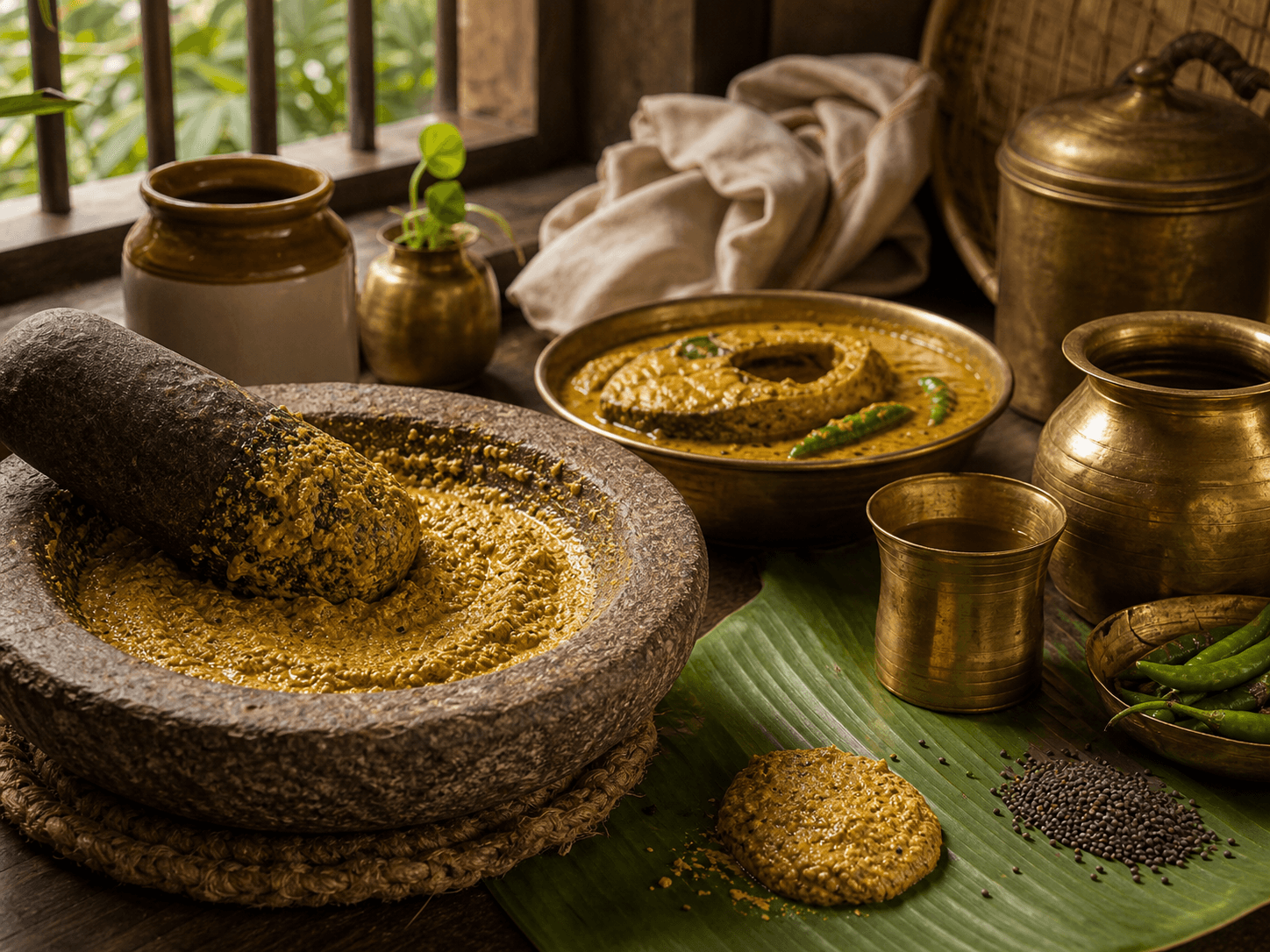
At dusk in any Kolkata para, the sound arrives before the smell: the sputter of a kadhai getting to temperature outside the telebhaja shop. Then the smell — beguni, aloor chop, phuluri — all of it riding on mustard oil, because in Bengal there is no serious argument about which oil. There is only shorshe, and the rest of the shelf.
Three forms of one seed
What sets Bengal apart is not that it cooks in mustard oil — half of north India does that. It is that Bengal deploys the seed in three registers at once. The oil, shorsher tel, for frying and finishing. The paste, shorshe bata, ground fresh on stone with green chilli, the engine of the great fish preparations. And kasundi — the aged, fermented mustard relish, sharp enough to make you blink — which sat on Bengali tables generations before any imported condiment claimed the refrigerator door. Oil, paste, pickle: a complete grammar built from one seed.
Shorshe ilish, the ceremony
Every cuisine has a dish that functions as a credential. Bengal's is shorshe ilish. Hilsa, the beloved and bony monsoon fish, coated in mustard paste, turmeric and raw mustard oil, steamed gently until the oil, the paste and the fish's own richness negotiate a settlement. No onion, no garlic, no tomato to hide behind. It is the most exposed dish in the repertoire — which is exactly why it is the measure. Change the oil and the dish does not merely suffer; it becomes a different, lesser thing with the same name.
Why the bite belongs here
Geography wrote the palate. A land of rivers, ponds and long wet months eats fish and greens in quantity, and a cuisine of delicate river fish wants a counterweight — something with an edge to stand against the sweetness of the flesh and the water in the vegetables. The mustard's jhal, its clean heat, is that counterweight. Where Punjab uses the oil's pungency as a foundation to build upon, Bengal uses it as a voice in the dish — audible from the first bite to the last.
“In Bengal you do not learn to like mustard. You are born mid-argument about it.”
The north cooks in mustard oil. Bengal, it is fair to say, thinks in it. And every winter, when the yellow fields of the western belt are photographed for postcards, somewhere in Kolkata a stone grinder is turning the same seed into Sunday lunch.